





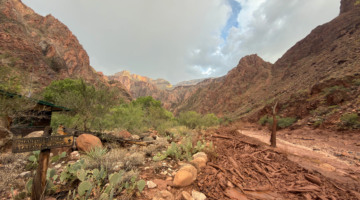



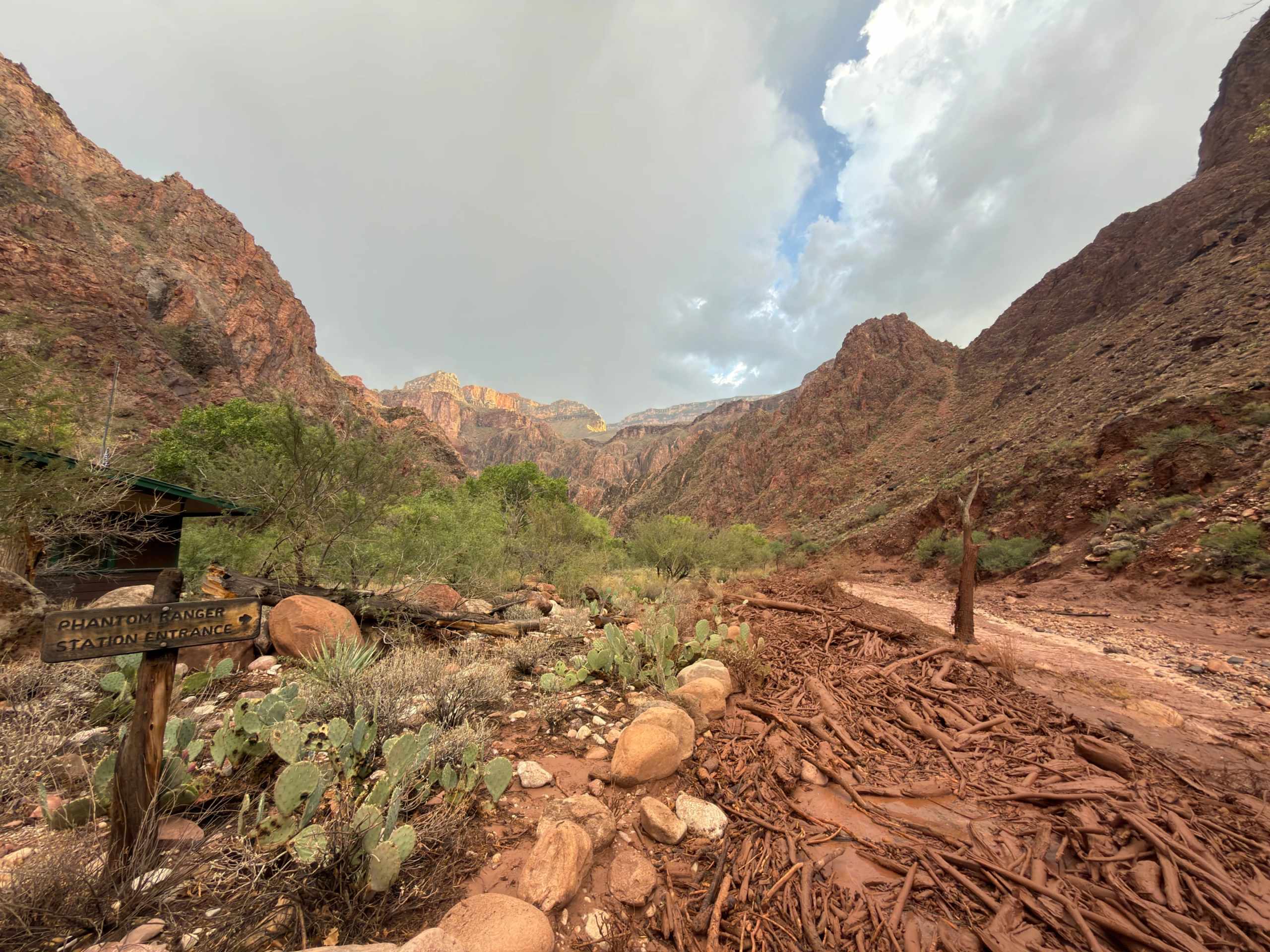
FLAGSTAFF, Ariz. (AP) — One person died and about 15 people are missing or unaccounted for after a major flash flood at the Grand Canyon forced evacuations, swept large boulders into the Colorado River and knocked out the sole water pipeline that serves tourists and residents, the National Park Service said Sunday.
The body of a 46-year-old man was recovered Sunday evening near Crystal Rapids along the Colorado River, the park service said without providing additional details. Coroner’s officials were at the scene.
Weekend flooding in Arizona’s Bright Angel Creek, which flows into the river, happened Saturday afternoon. More than 60 people were evacuated from the depths of the canyon. The park service said it had yet to account for 15 people and asked anyone with details about hikers or campers in the canyon to get in touch. The Arizona Department of Public Safety was helping with additional evacuations Sunday.
Because the main water line was out of service, starting Monday tourists won’t be able to stay overnight at lodges and hotels within Grand Canyon National Park. Year-round residents are being asked to conserve water.
“These measures are crucial for ensuring the safety and sustainability of water resources,” the park said in a statement.
Parth Desai was hiking through a narrow passage in Bright Angel Canyon with fellow physicians and a park ranger when the downpour started Saturday.
“We saw the creek flood, waterfalls coming up out of nowhere, boulders, mud, landslides happening everywhere,” he said.
Later, as they made their way toward Phantom Ranch, a colleague shouted “Up, Up, Up, Up!” as a 4-foot (1-meter) debris wall headed toward them and they ran up into a patch of cacti, he said. They were rescued by helicopter late Saturday after making it to the Phantom Ranch area, he said.
Torrents of water wiped out footbridges over the creek and altered the landscape, widening the creek bed and extending an existing river rapid or creating a new one. The flood was a major blow to an enduring effort to modernize the pipeline that serves 6 million visitors a year and roughly 1,600 residents of Grand Canyon Village.
“Heaven help us if the whole thing down there at the bottom has to be reconstructed,” said Jack Schmidt, director of the Center for Colorado River Studies at Utah State University. “Where are they going to get the money? It’s a nightmare for the park service. And thank God nobody was hurt or killed.”
Halting overnight stays at the park because of a lack of water is rare, although the pipeline frequently has failed over the years.


No Comment