


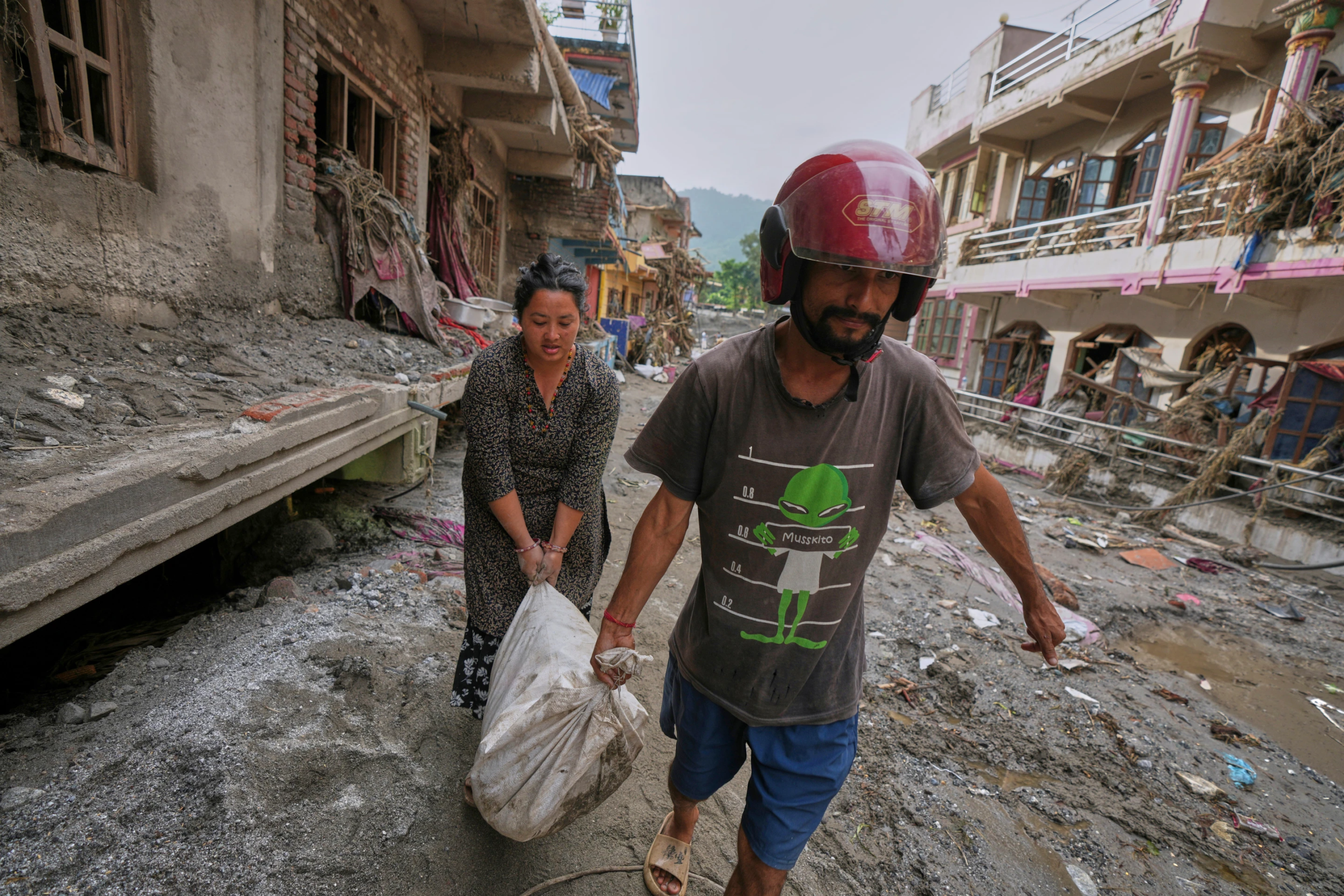
KATHMANDU, Nepal (AP) — Nepal’s disaster agency said Saturday the country’s death toll from the flash floods had risen to 626, with 2,426 people missing, as search-and-rescue efforts along the Nepal-China border entered their fourth day.
The agency’s previous figures were 579 dead and 1,924 missing.
China has separately reported seven deaths and 554 people missing in Tibet.
THIS IS A BREAKING NEWS UPDATE. AP’s earlier story follows below.
KATHMANDU, Nepal (AP) — Poor weather hampered aerial rescue operations in Nepal on Saturday as the search for hundreds of missing people in areas devastated by catastrophic flash floods along the border with China entered its fourth day.
Rescue workers and military personnel have been working around the clock since Wednesday’s disaster, which killed nearly 600 people and left almost 2,500 missing. Some survivors have been pulled from the mud, while crews continue searching several locations for those still missing.
But Brig. Gen. Raja Ram Basnet, a Nepali Army spokesperson, said Saturday that helicopter operations were on hold until weather conditions improved.
Search and rescue efforts continued at several locations in Nepal and China’s Tibet, including the Upper Trishuli-1 Hydropower Project in Nepal’s Rasuwa district and the severely damaged Gyirong border crossing on the Chinese side.
Nepali Army spokesperson Brig. Gen. Raja Ram Basnet said rescue efforts would continue at the hydropower construction site, where authorities believe more than 100 people are trapped in a tunnel filled with thick mud.
Basnet said rescuers had used baskets and ropes to reach some people, but the operation remained difficult because of 4 to 5 feet (1.2 to 1.5 meters) of mud and the limited number of places where helicopters could land.
He said rescue teams had also been forced to relocate temporarily when authorities issued warnings about possible further flooding.
Rescuers have been on high alert for more flooding from a new lake that formed high up in the Himalayan mountains after the initial floods Wednesday. Experts warned that the lake, created after a glacier collapse that triggered the floods, was starting to overflow.
Monitoring data from the Chinese Ministry of Water Resources showed late Friday that the lake had dwindled in size. The water level dropped by 10 meters (32 feet) from the high point on Thursday morning, Chinese broadcaster CCTV said.
Aid trucks could be seen traveling from Kathmandu, Nepal’s capital, toward the affected areas.

No Comment